
Lemon Jelly
Launched on Amazon US and Canada — scaled from zero to $1.74M.
A European footwear brand with zero Amazon presence wanted to enter North America without diluting their DTC positioning.
- Built a premium brand experience — A+ content, listing imagery, Brand Store, brand story — to justify a 2–4x price premium
- Optimized conversion rate before scaling ad spend
- Proper campaign structure across both marketplaces
- Optimized SEO on copy, alt text, and canonical URLs
The starting state
Lemon Jelly is a European footwear brand with a distinct design identity and an established direct-to-consumer business. On Amazon North America, they had nothing. No listings, no reviews, no rank, no history for the algorithm to work with.
A blank account is a specific kind of problem. There's no data to optimize and no organic position to defend — every sale has to be bought before any of it compounds. And for a brand whose whole equity is design and positioning, there's a second risk that has nothing to do with advertising: Amazon can flatten a premium brand into a commodity listing very quickly. A white-background photo, a price, and a star rating is not a brand.
The brief was to enter the market without diluting what made the brand work everywhere else.
The constraint that actually mattered
Lemon Jelly sells at two to four times the price of the competing products sitting next to it in search results. That single fact determined everything about how this launch had to be run.
On Amazon, a shopper comparing a grid of similar-looking shoes defaults to the cheapest one. Being the most expensive option is only viable if the listing does the work of explaining why — and that explanation has to happen in images, above the fold, in the few seconds before the back button. Price premium without perceived-value premium is just a worse listing.
So conversion rate wasn't one lever among several here. It was the entire viability question. A new ASIN gets organic traffic based on how well it converts the traffic it already has; a premium-priced ASIN that hasn't earned its price converts badly, never ranks, and ends up permanently renting its own keywords through ads. Get it right and the premium price becomes an advantage — the same conversion rate on a higher AOV funds far more aggressive bidding than a budget competitor can match.
That's why the work led with the brand experience rather than the ad account.
What we changed
Made the brand look worth the price. A+ content, listing imagery, the Brand Store and the brand story were treated as the primary asset, not post-launch polish. In footwear the objections that stop a purchase are visual — fit, material, how the shoe actually looks worn — and at a 2–4x premium they have to be answered before the shopper thinks about price at all. This is the difference between a listing that reads as expensive and one that reads as premium.
Optimized conversion rate before scaling spend. Ads were used to buy traffic into a page that was already closing, not to compensate for one that wasn't. Higher conversion raises rank, rank brings traffic you stop paying for, and the compounding starts from a stronger base. Reversed, the same budget buys velocity that evaporates the moment you turn it off.
Structured advertising properly across both marketplaces. The US and Canada are separate auctions with different competitive density and different CPCs. Run as one program, one market quietly subsidizes the other and neither is really being managed. Separated, each could be scaled at its own pace against its own economics.
Optimized on-page SEO. Copy, image alt text and canonical URLs — the unglamorous relevance work that decides whether a listing is even eligible to rank for the terms it's targeting. A listing that isn't indexed for a keyword cannot rank for it at any budget.
The numbers
- Starting revenue: $0
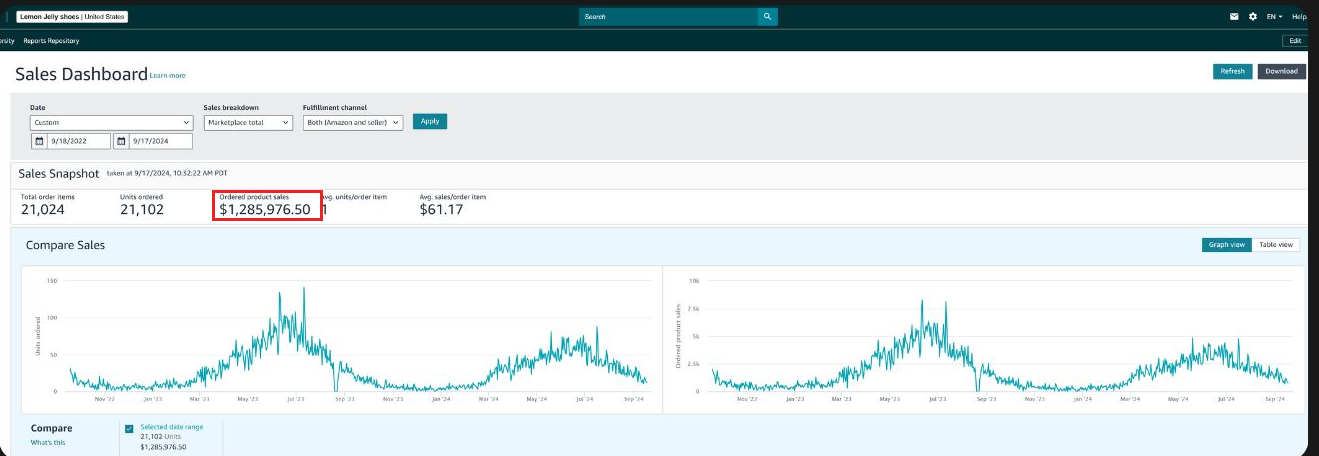
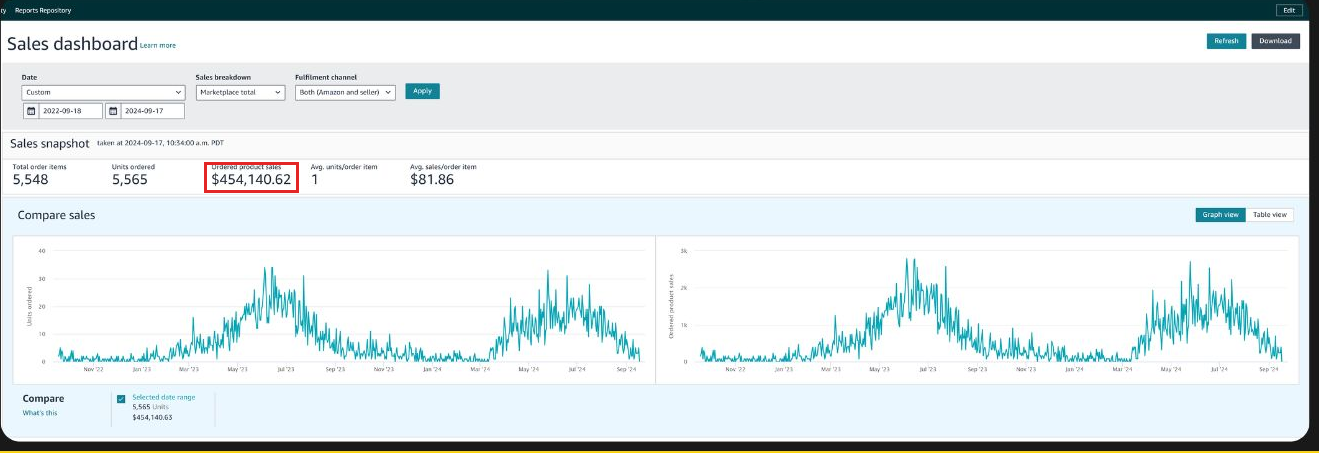
- Scaled to: $1,740,117 — $1,285,976 in the US and $454,141 in Canada
- Markets launched: US and Canada
Why this worked
The instinct on a zero-history launch is to spend into it — aggressive ads until rank arrives. That works, expensively, and it builds an account permanently dependent on ad spend.
At a 2–4x price premium it doesn't work at all. You cannot buy your way past a listing that hasn't justified its price; you just pay more per sale, forever. The order matters: make the brand experience earn the premium, then buy traffic into something that closes. Revenue followed, and the brand equity that makes the premium possible everywhere else stayed intact.
We publish the full version of this approach in our Amazon SEO guide and listing optimization guide. If you're launching a premium brand on Amazon, full account management is the service that covers it end to end.
Book a free Gap Analysis. We'll audit your account the same way we audited Lemon Jelly.
Book a Gap Analysis →