

Lupa
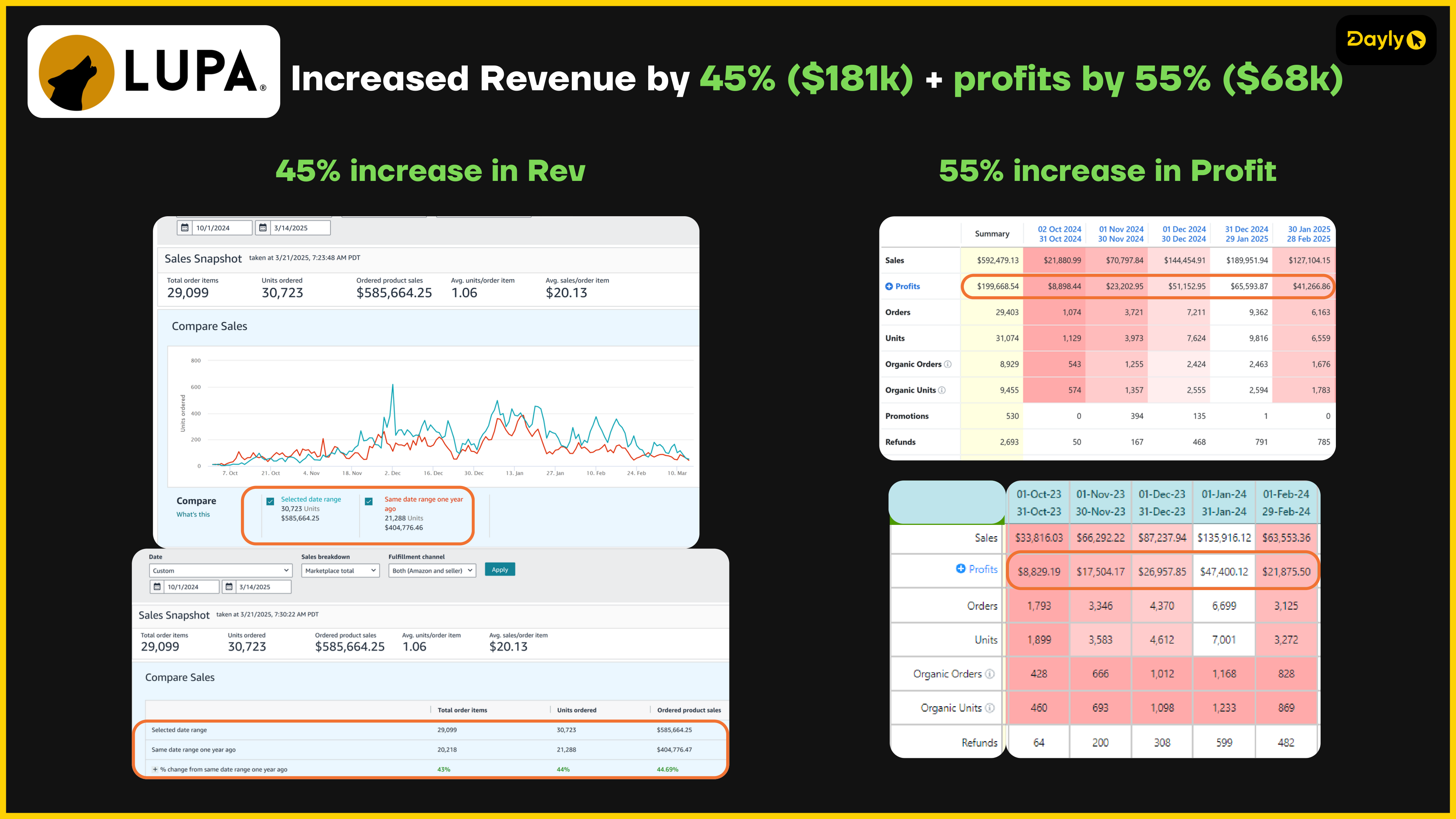
+45% revenue and +55% profit across a single season.
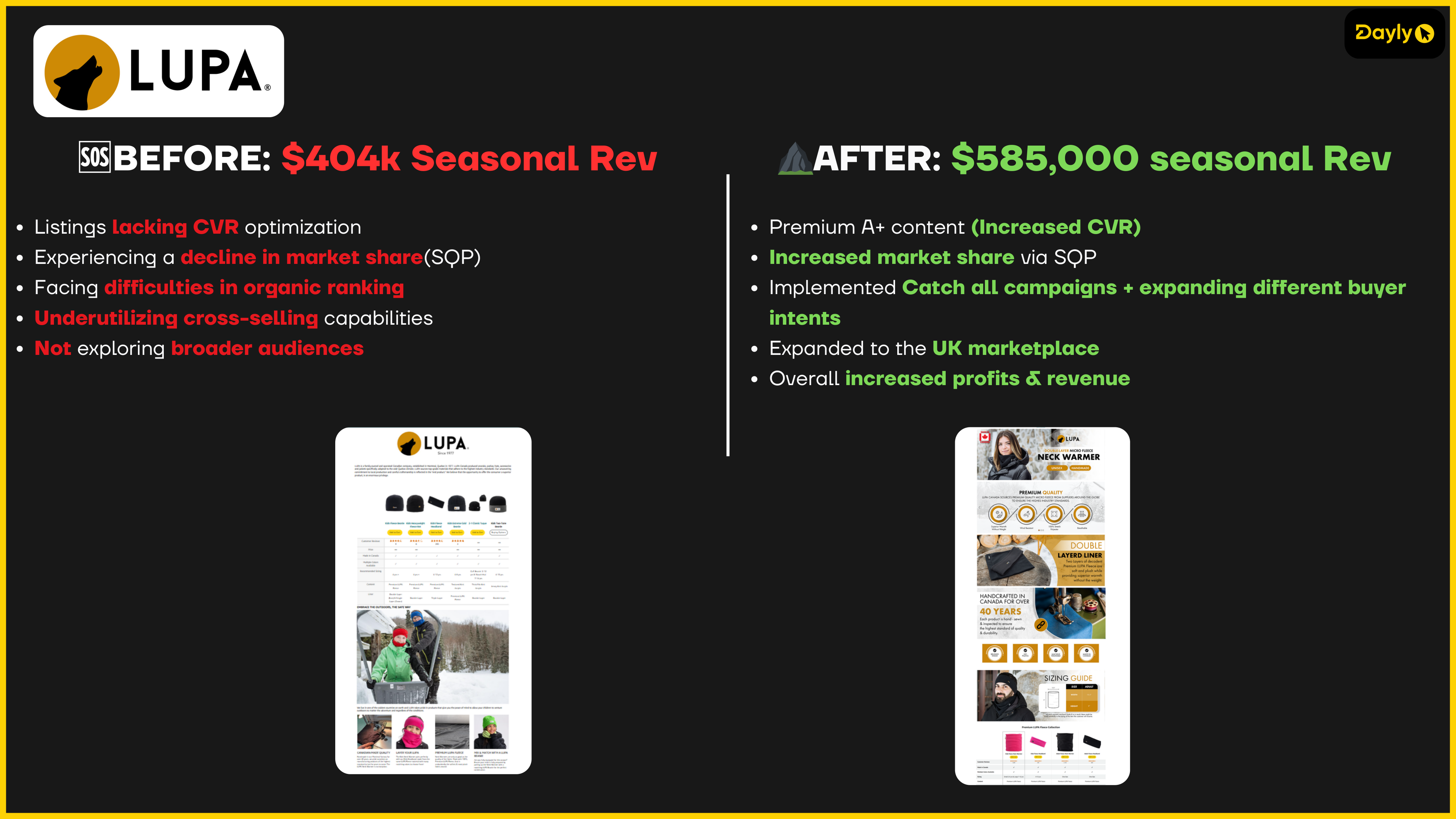
Listings were lacking CVR optimization and losing market share in SQP. Cross-selling was underutilized and broader audiences weren't being reached.
- Rebuilt A+ content for premium conversion experience
- Increased market share via Search Query Performance work
- Deployed catch-all campaigns across multiple buyer intents
- Expanded the brand into the UK marketplace
The starting state
Lupa's business runs on a season clock. The selling window is roughly October to mid-March, with October and March as partial months, and the rest of the year is preparation. That constraint shapes every decision in this account: work that isn't finished before October doesn't count until the following year.
Going into the season, the account had four problems.
Listings weren't optimized for conversion, so the traffic already arriving was underperforming. Search Query Performance data showed the brand losing market share on its core terms — competitors were taking a growing share of the same searches. Cross-selling was barely used despite a catalog that supported it. And the brand was addressing a narrower set of buyer intents than the category actually contained.
The market share decline was the urgent one. Losing share on your core terms during a compressed season is a compounding loss, because the ranking you give up is harder to win back once a competitor holds it.
What we changed
Rebuilt A+ content for a premium conversion experience. First, because conversion rate multiplies everything downstream and it's the cheapest lever in a seasonal account — it improves the return on traffic you're already paying for.
Reclaimed market share using Search Query Performance data. SQP shows exactly where a brand is losing share on specific queries. That let us target defensively where share was slipping rather than guessing at the whole keyword set.
Deployed catch-all campaigns across multiple buyer intents. The account had been speaking to one kind of shopper. Broadening across intents opened demand the brand had not been eligible for.
Expanded into the UK marketplace. New demand from the same catalog and the same operational base — the most capital-efficient growth available once the domestic account is working.
The numbers
One season against the prior one:
- Seasonal revenue: $404,776 → $585,664 — up 45%, an additional $180,888
- Seasonal profit: $128,000 → $199,668 — up 55%, an additional $71,668
- Markets: US, expanded to UK
Profit grew faster than revenue — 55% against 45% — which tells you the growth came from conversion and market share rather than from buying more traffic.
Why the season clock matters
Every number here is a season-on-season comparison, and that's the only comparison that means anything for a brand like this. Month-over-month growth in November is just the calendar.
It also changes the working rhythm. Conversion and SEO work has to land before October, because SEO takes weeks to compound and a season is barely five months long. Do the work in December and you're building for next year, not this one.
Read how long Amazon SEO takes for the timing constraint, or see full account management.
Book a free Gap Analysis. We'll audit your account the same way we audited Lupa.
Book a Gap Analysis →